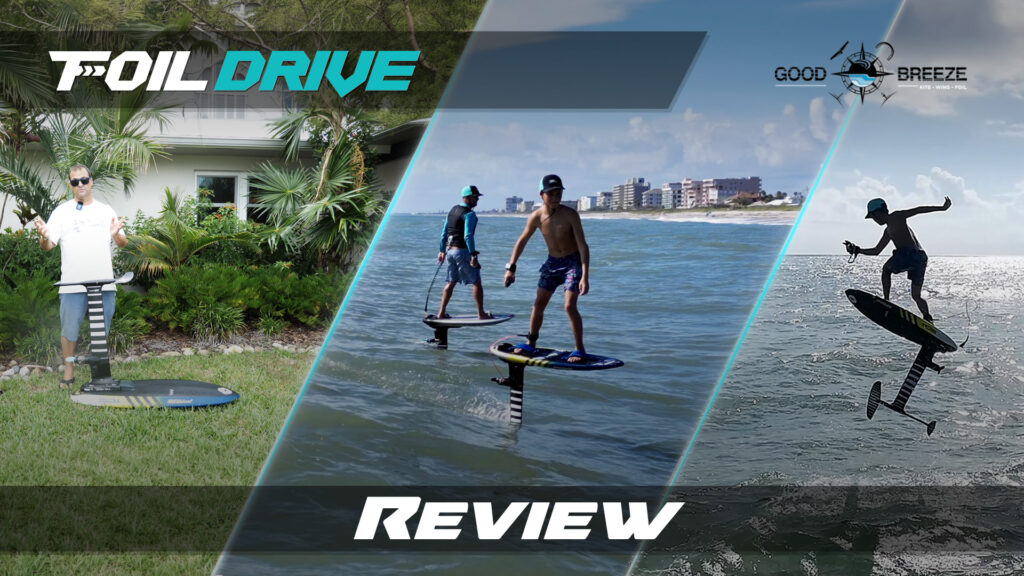
Foil Drive Generations Review with Brad and Jacob Evers – Kiteboarding Closeouts / Foil Outlet
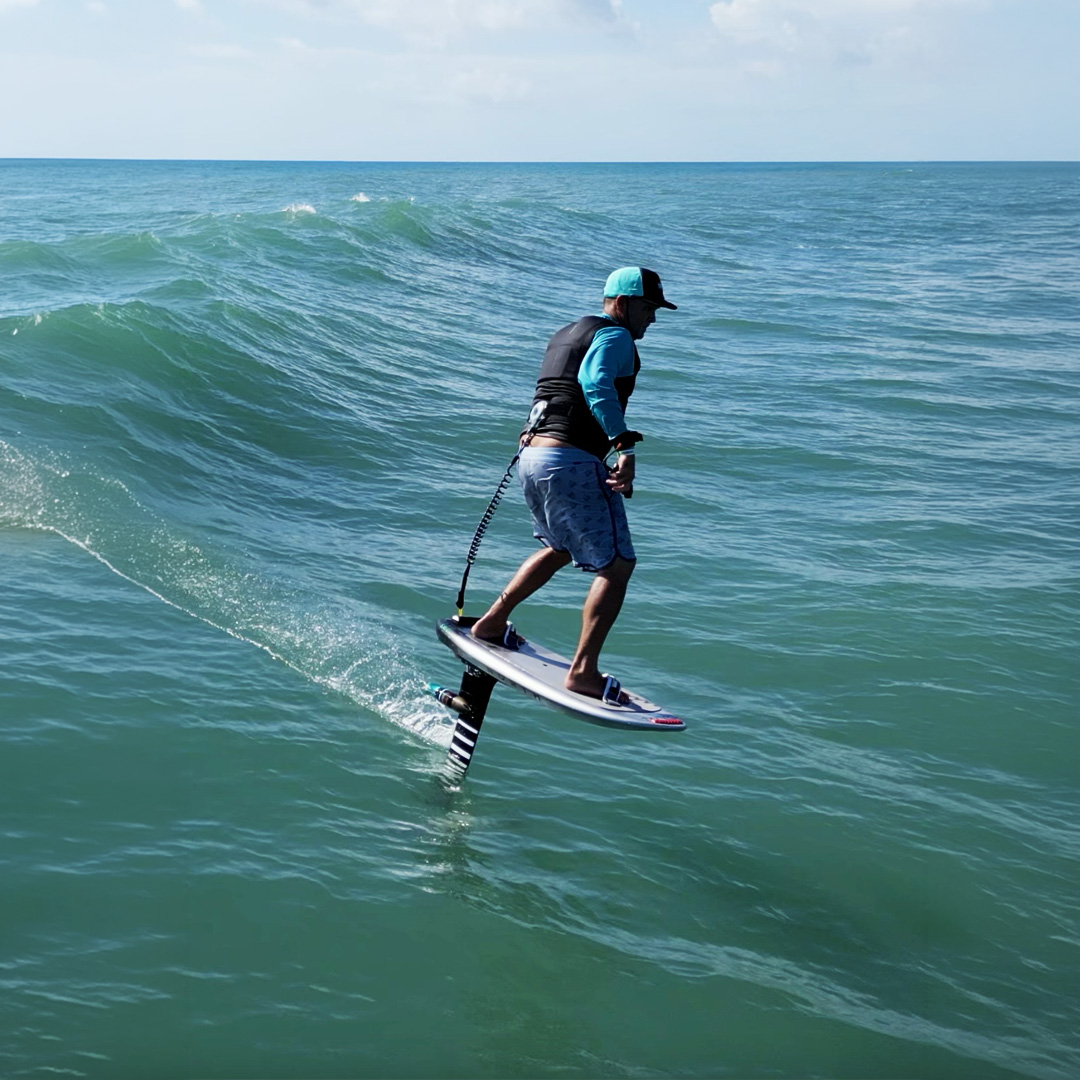
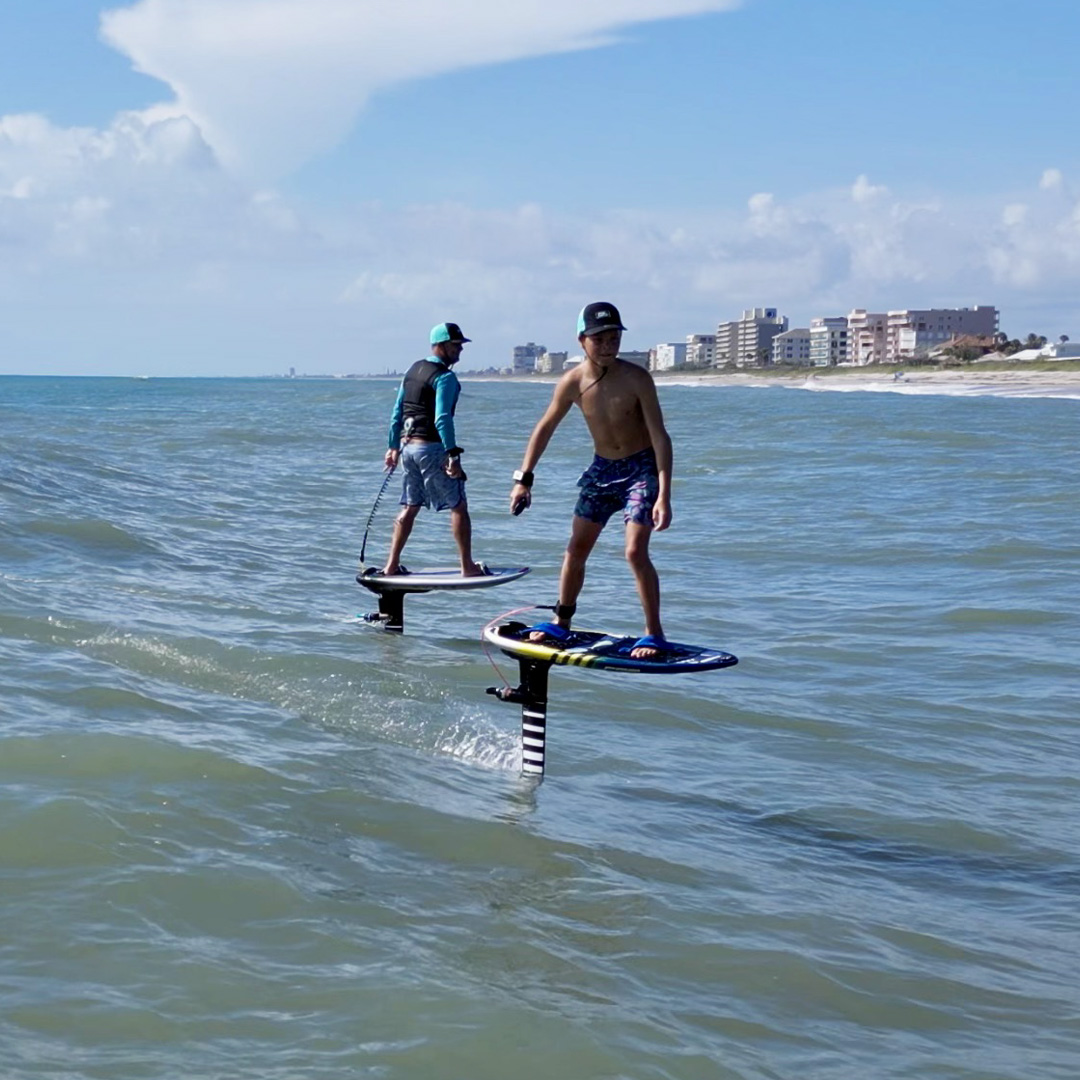
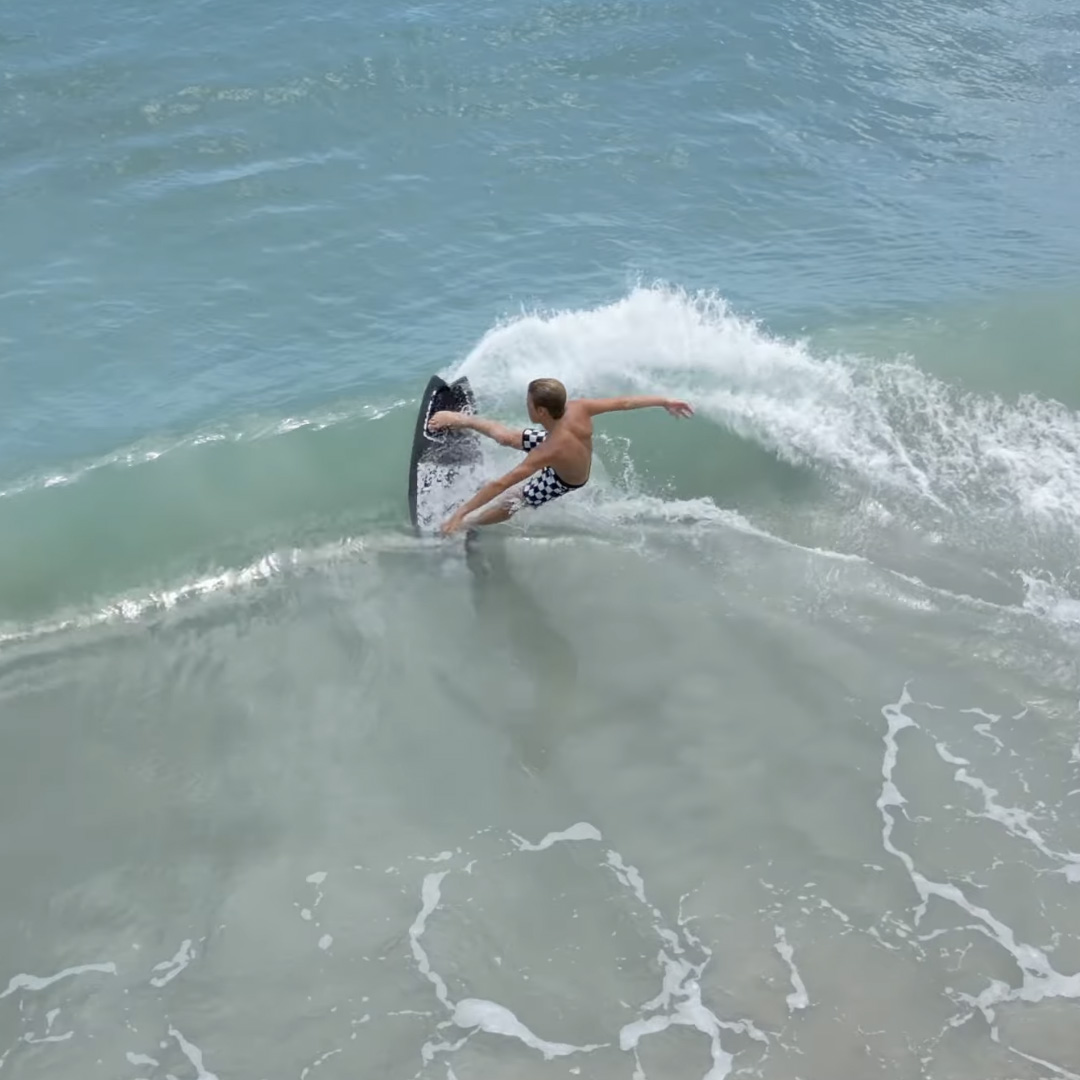
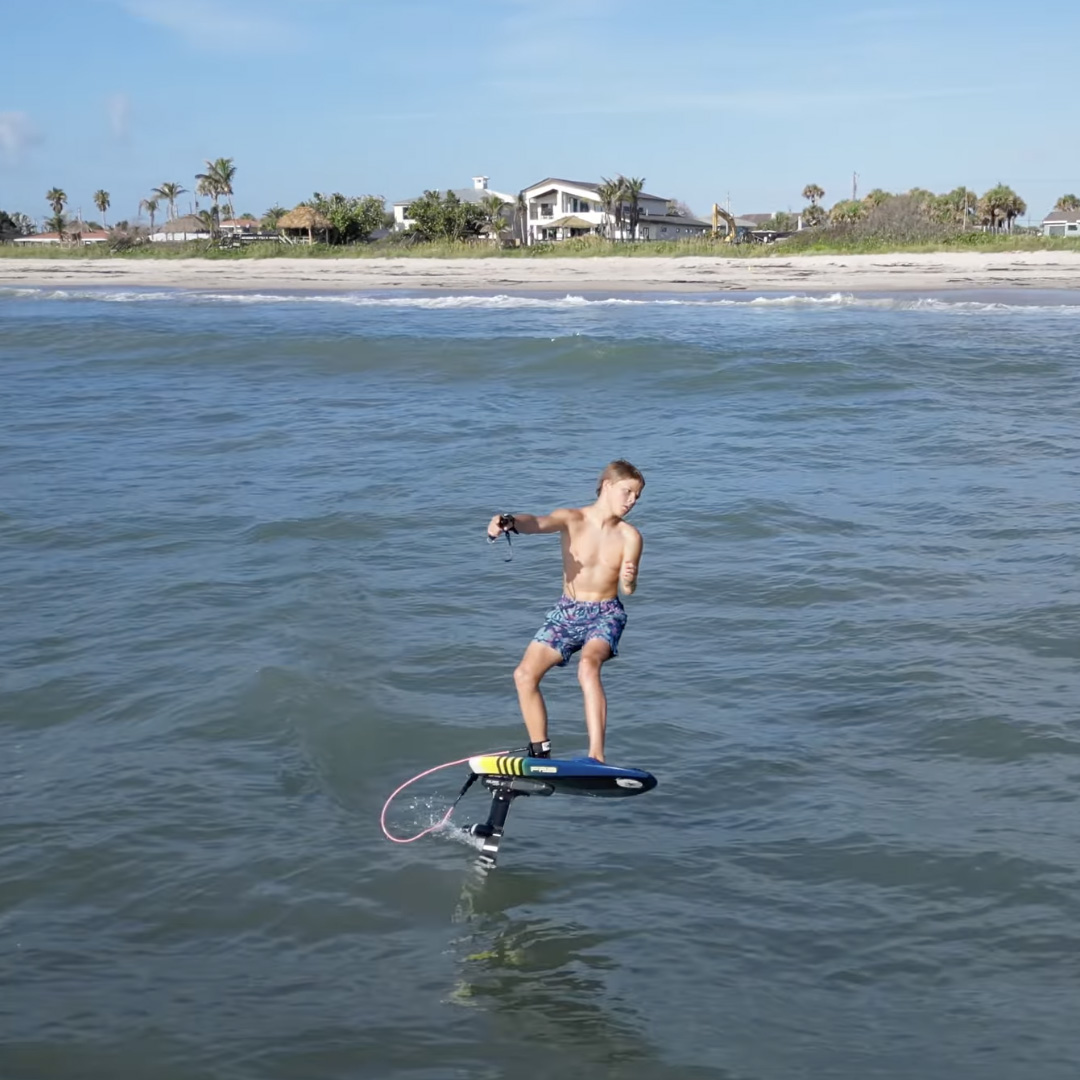
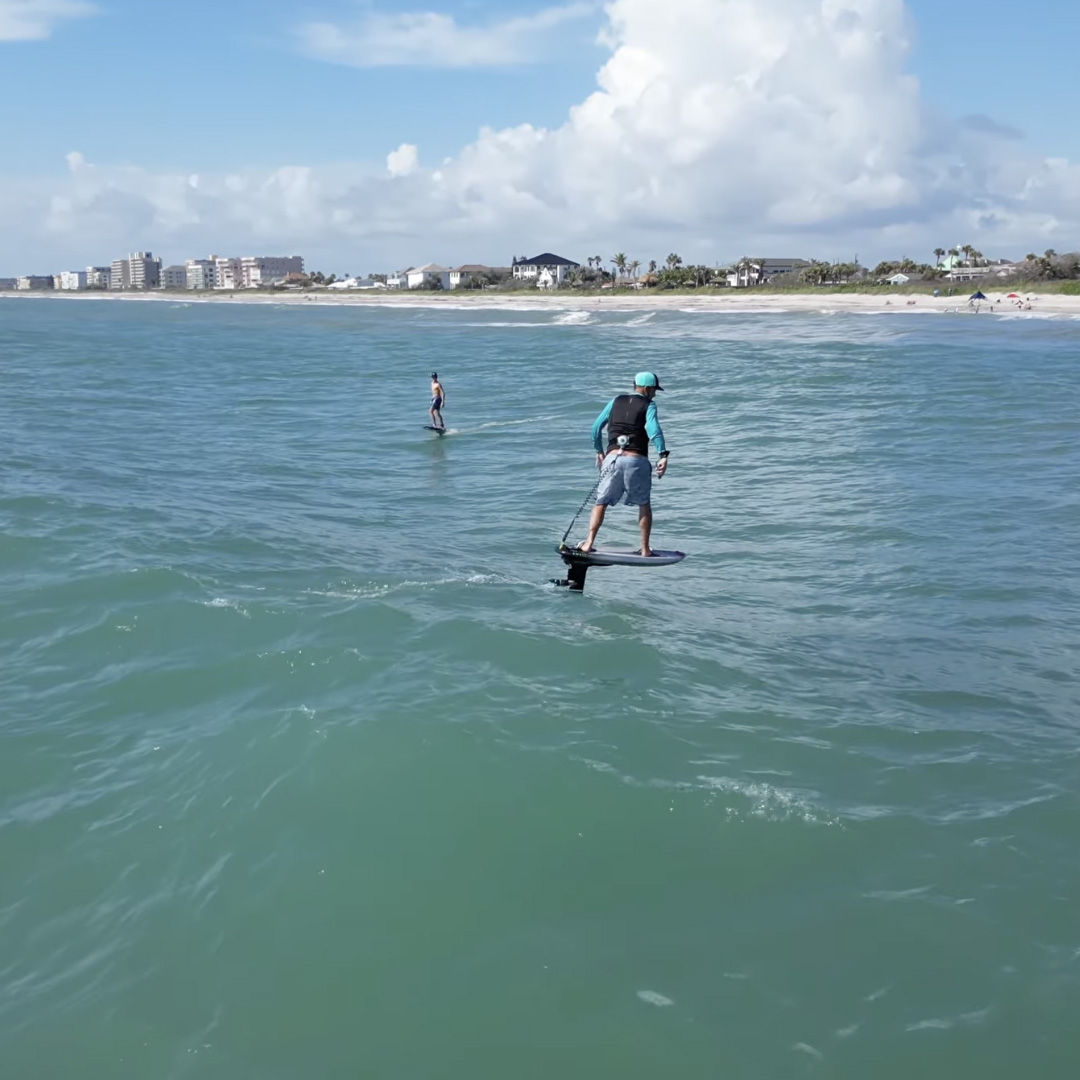
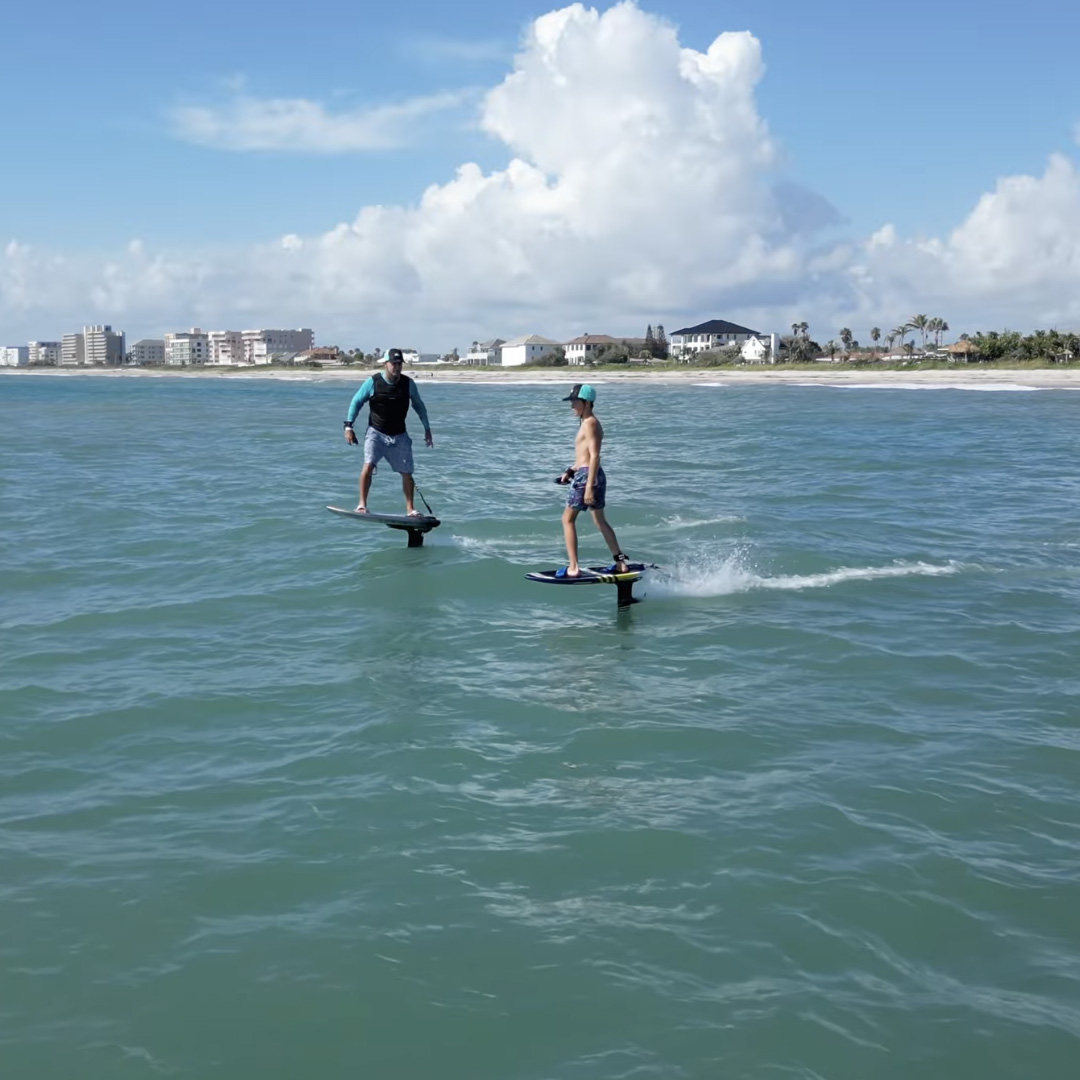
Brad and Jacob Evers are father-and-son beachside locals who live for surfing, skimboarding, wing foiling, and anything that gets them in the water together. Once both of them started riding Foil Drive systems, their time on the water—and time spent riding side-by-side—increased dramatically. Days that used to be “too small” or “not worth it” suddenly became full sessions. The pair sat down with Good Breeze / Foil Outlet to talk setups, the new Mini Pod, and how Foil Drive has completely changed the way they look at the ocean, swell, and what’s possible.
The Foil Drive system delivers exponentially more water time, accelerates learning, and opens up small Florida days, early rolling swell, and crowd-free lines that traditional prone, skim, or wing sessions simply can’t reach.
What Makes the Foil Drive Stand Out in Real Local Riding?
Jacob and Brad break down exactly how they run their systems and why the latest hardware (especially the Universal Mini Pod) feels like a real step forward.
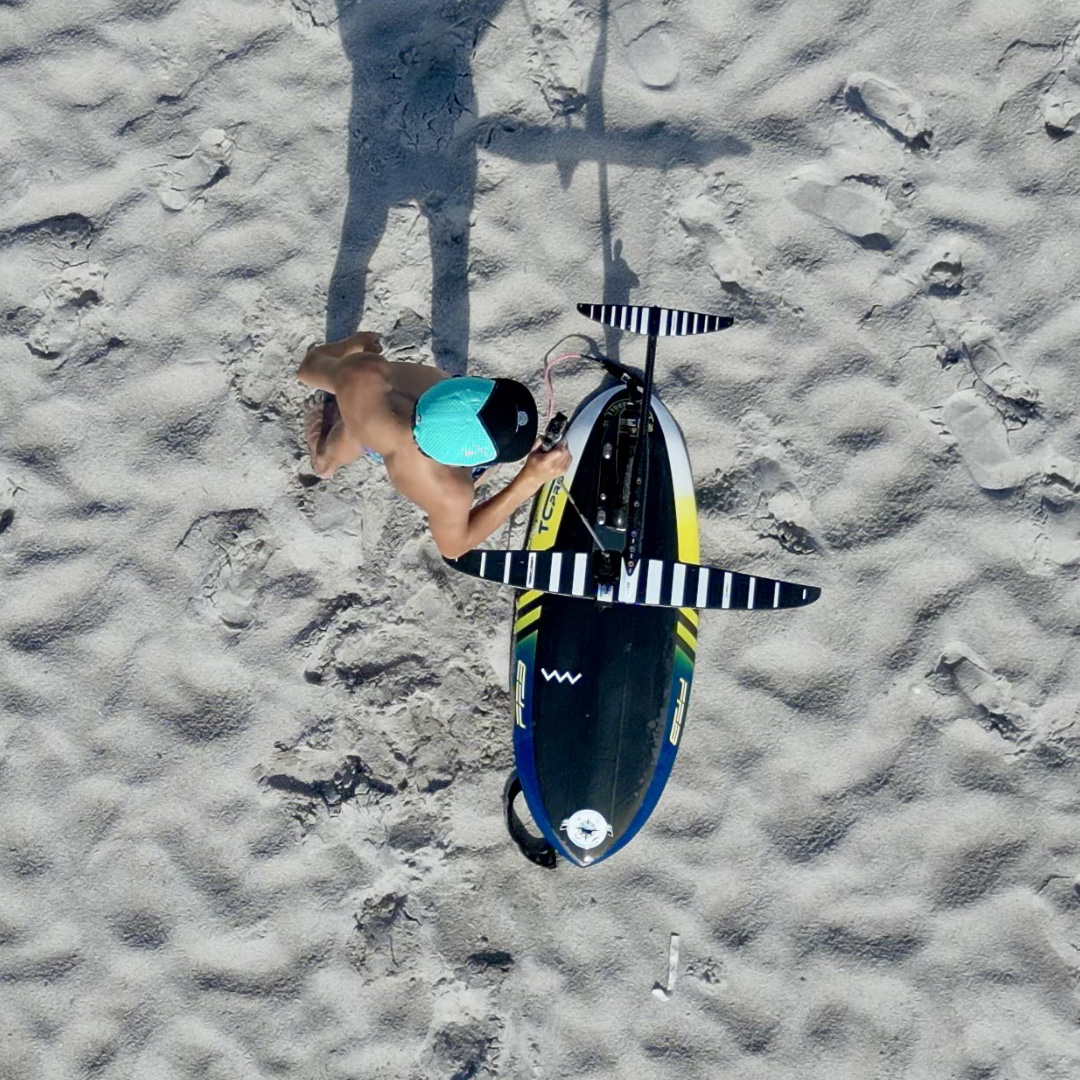
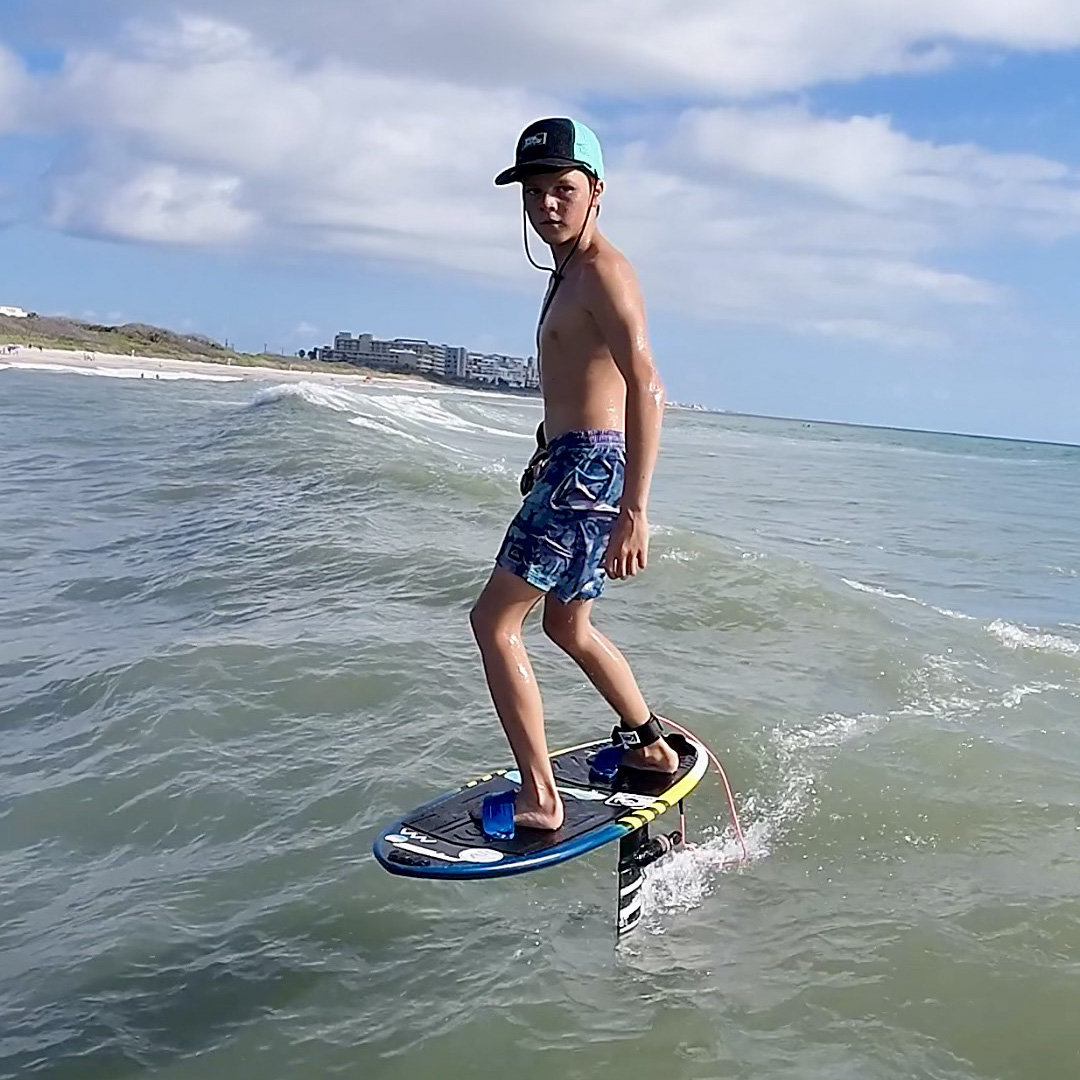
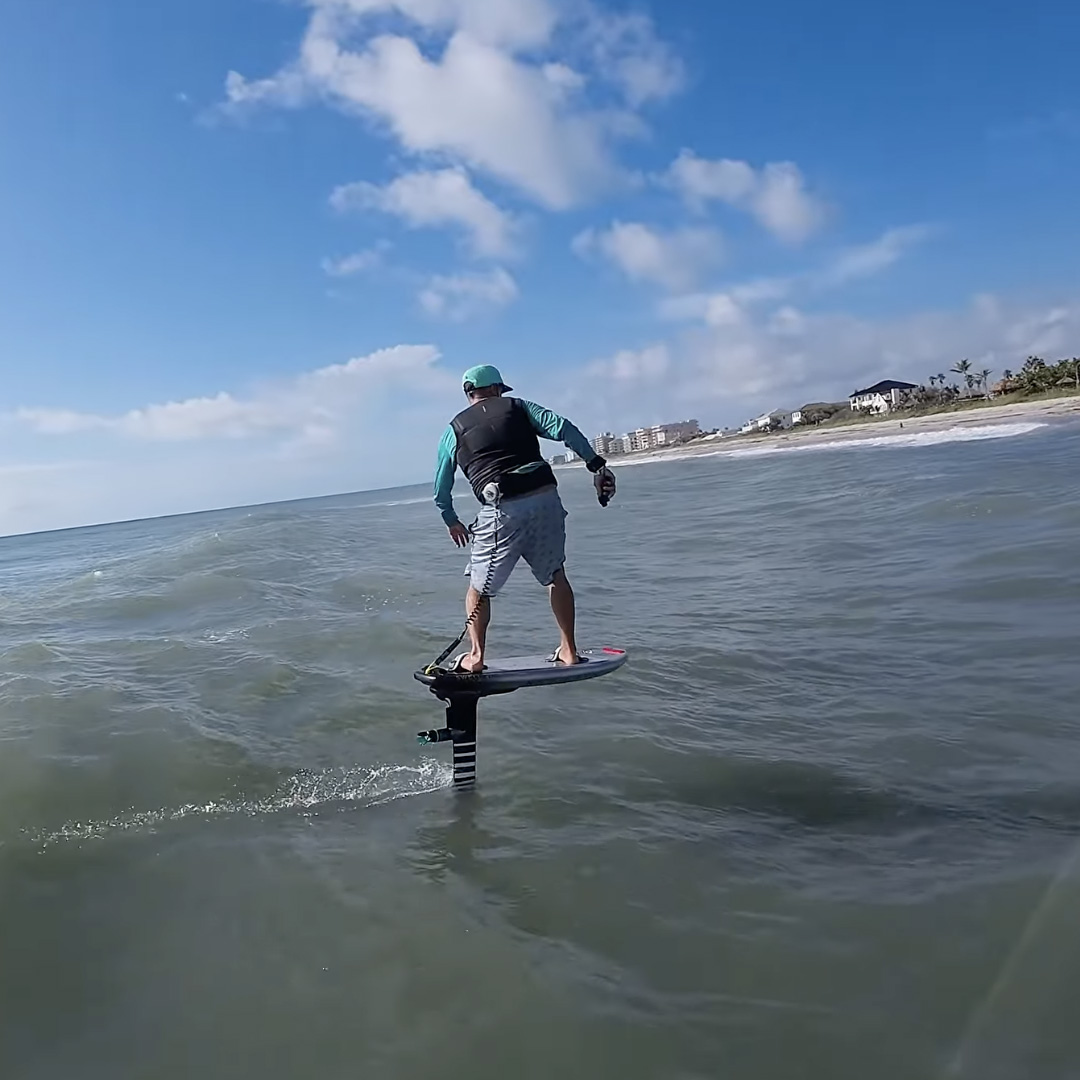
Jacob Evers’ Setup & Take: Jacob rides a HA 680 front wing with a Dart 120 (or his preferred Dart 140) tail on an older carbon mast. He’s on the Foil Drive Slim with the new Mini Pod and prefers the lighter Sports batteries. For props he runs the blue blades for a balanced mix of torque and speed.
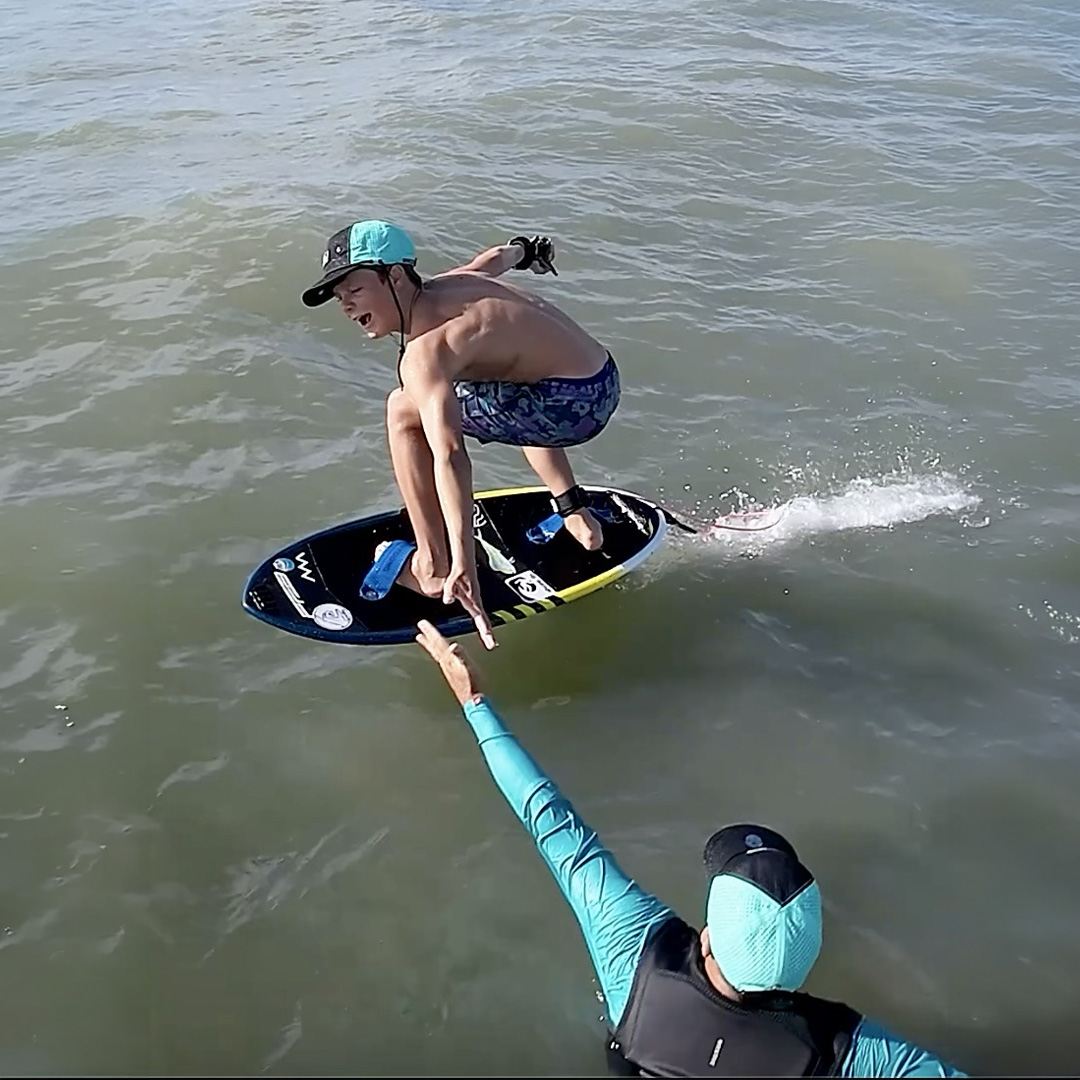
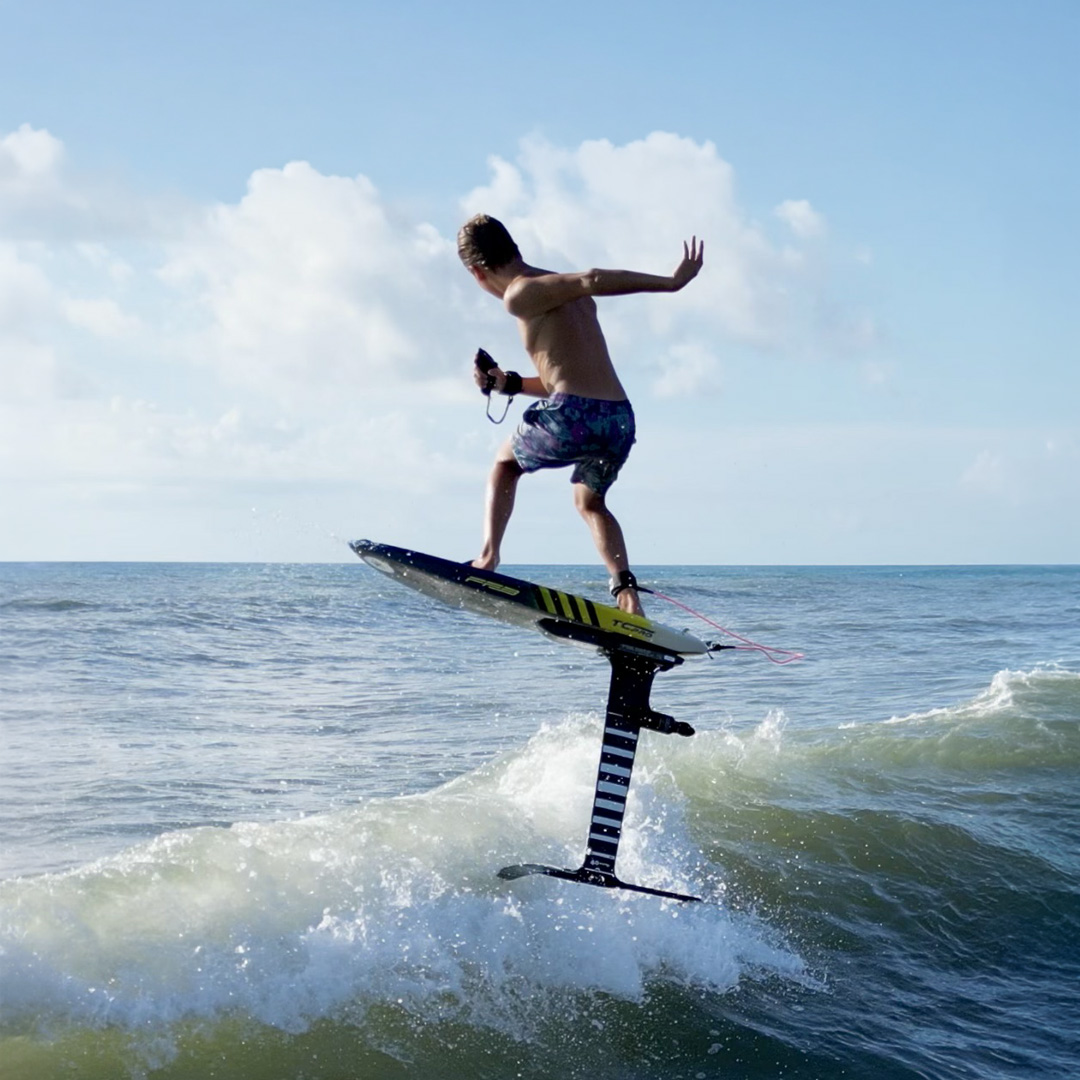
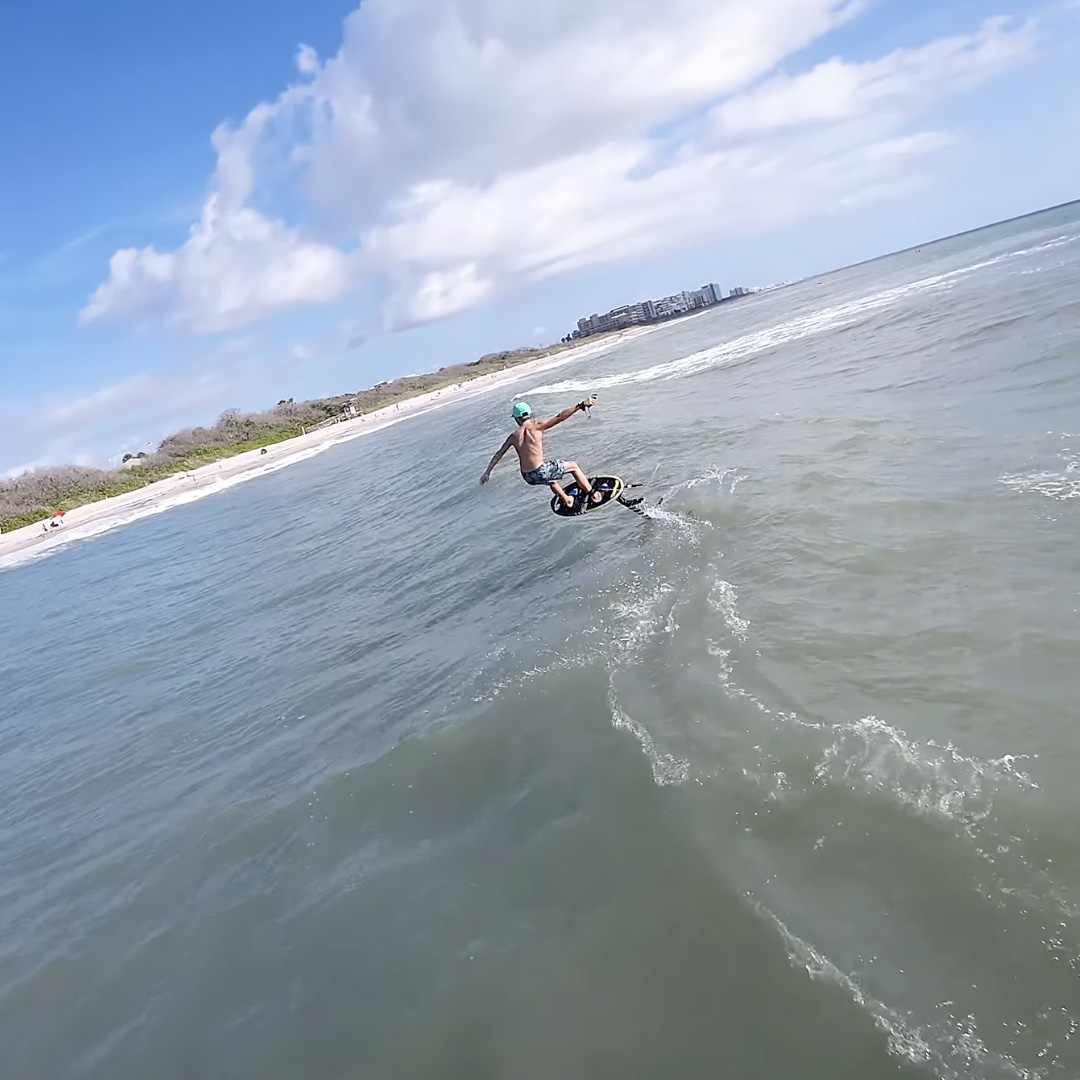
He switched to the Mini Pod from the older, bulkier pod and immediately noticed the difference: far more hydrodynamic, cleaner through the water, and almost no disruption when he dips or pumps. Touchdowns barely affect the ride, so he can keep pumping and stay in control. Straps give him more board control for airs and the 360s he’s currently working on.
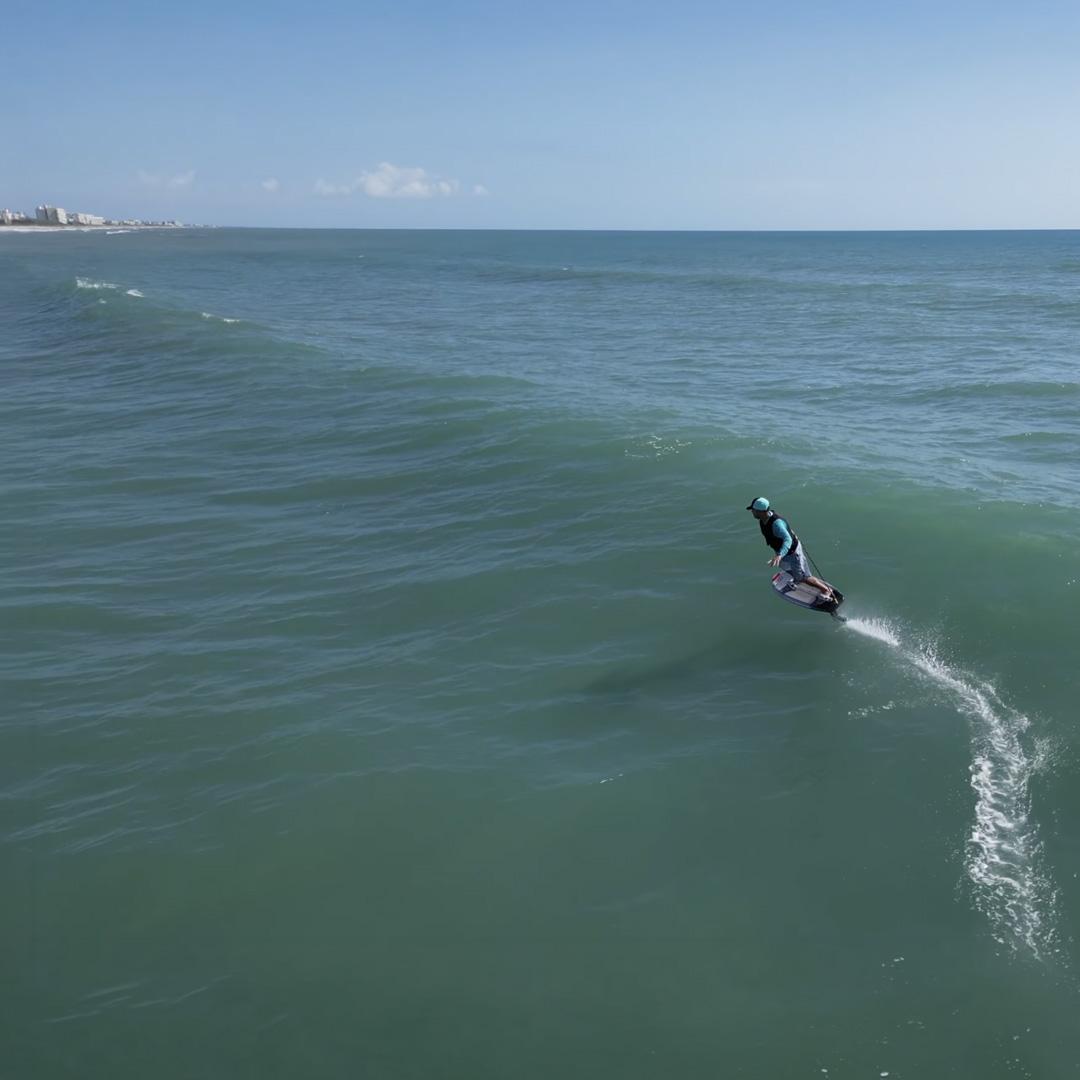
Jacob’s favorite use case is the ultra-small days when surfing or skimboarding just isn’t fun. With Foil Drive he can get way outside the crowd, link longer glides, and ride all the way in without burning energy paddling or pumping back out. He also notes that riding with other people (especially his dad) makes the whole experience more fun.
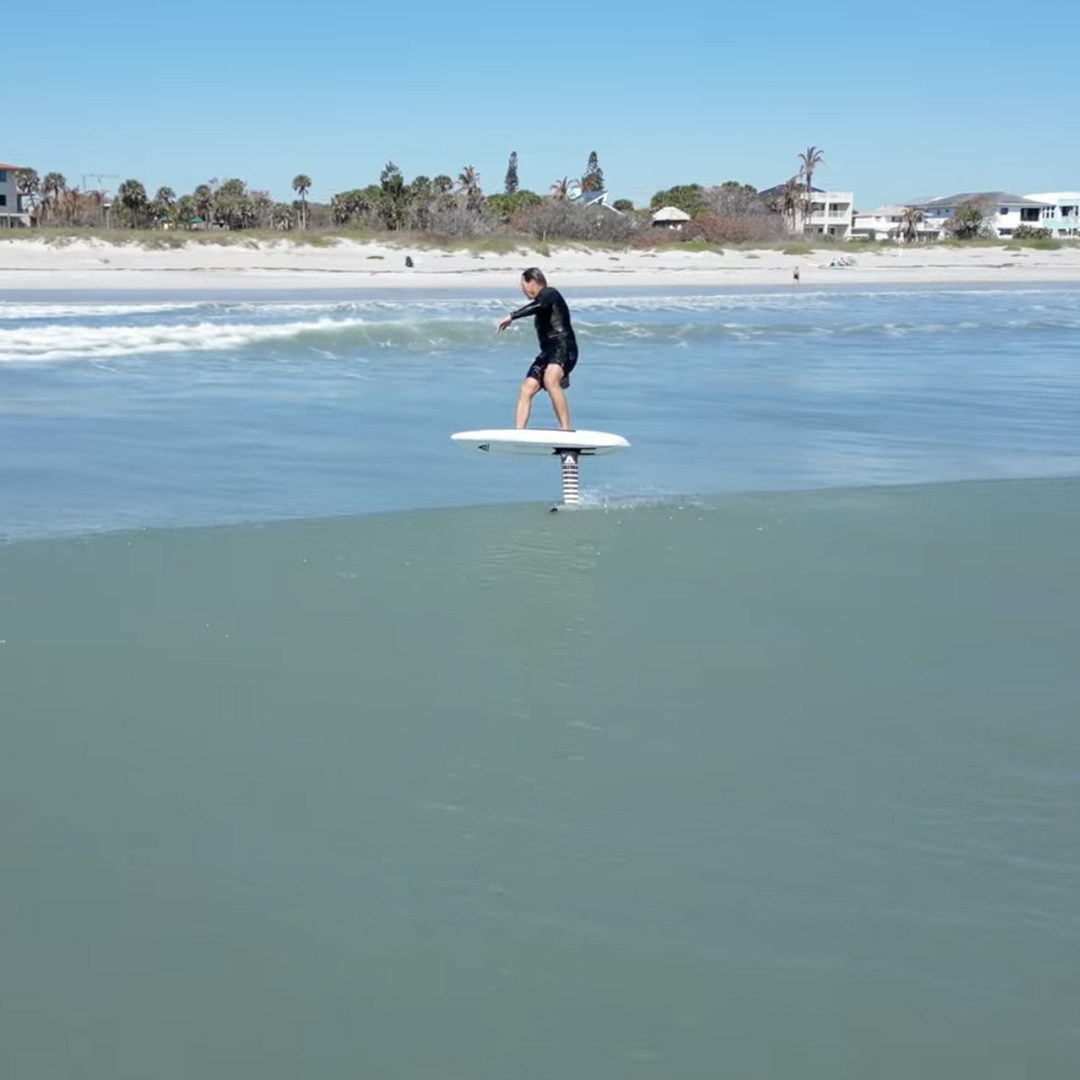
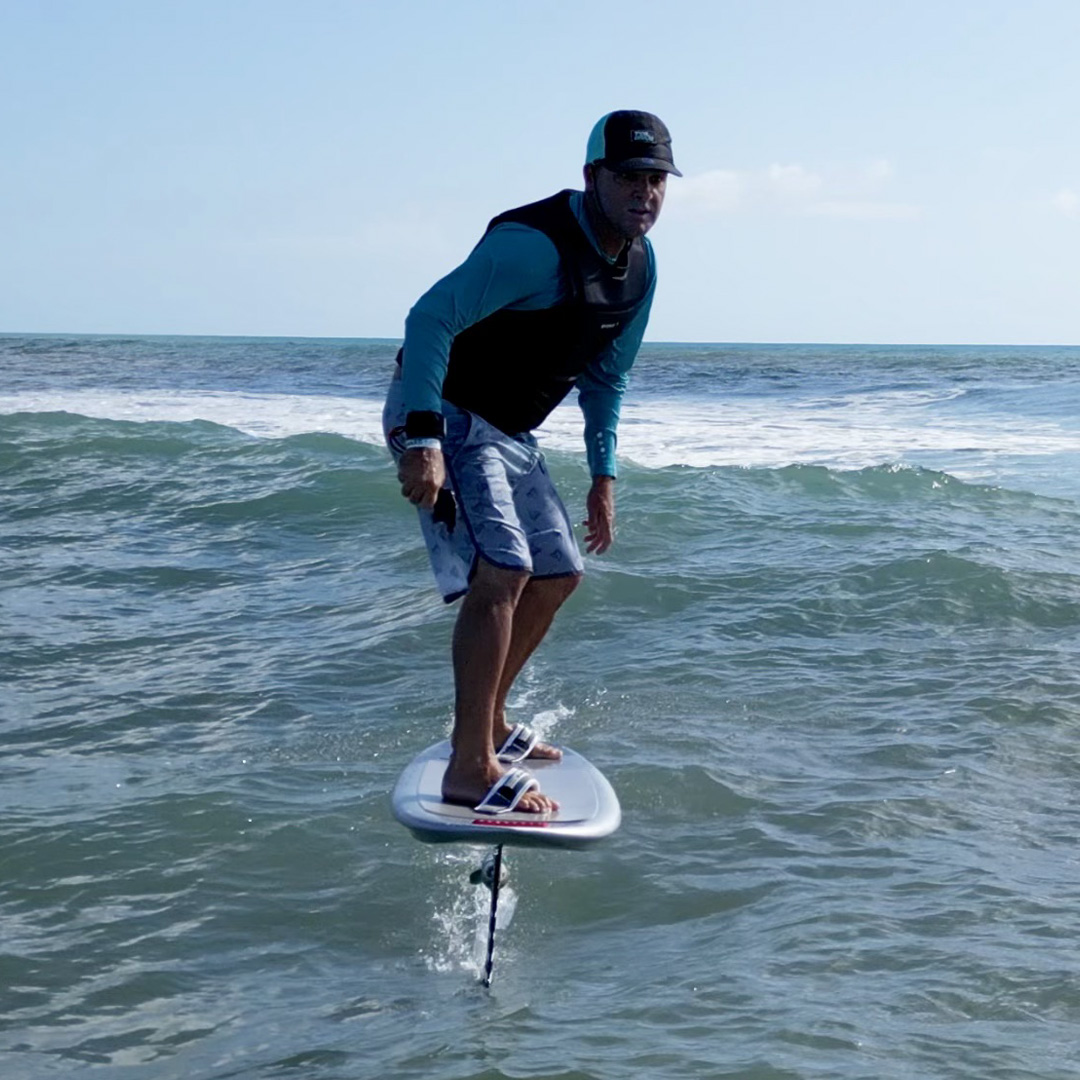
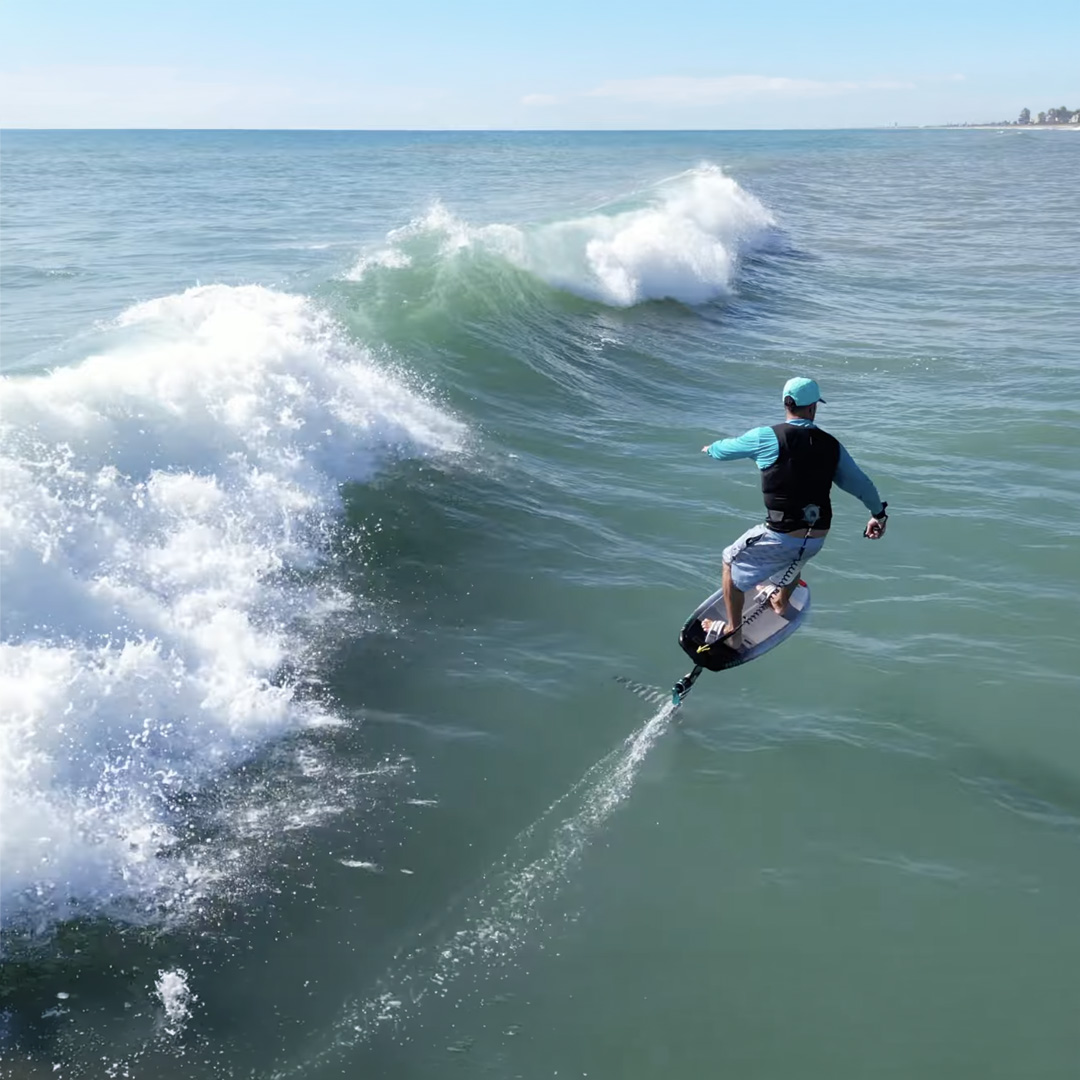
Brad Evers’ Setup & Take: Brad has been foiling about five years, starting on the original Slingshot and Go Foil gear and now riding Armstrong (UHA-style wing around the 870 range with Speed 180 or Surf 205 tails). He typically runs the larger Max battery and gets roughly an hour to an hour-twenty on productive wave days. He keeps a dedicated mast set up for Foil Drive so he doesn’t have to swap gear constantly.
For Brad the biggest win is pure water time. He counted ten straight days of foil-driving last year on conditions that wouldn’t have been worth dragging out a longboard or skimboard. Knee-high or smaller Florida days, early rolling swell, and the ability to stay away from the packed peak all become usable. He still prefers proper head-high dumping waves when they’re on, but Foil Drive fills every gap in between and brings back the independent, solo-sport feel he loved as a kid.
The system also accelerates the learning curve—more wipeouts mean faster feedback and more time actually riding. Brad is clear that responsibility comes first: stay risk-averse, stay away from other people in the water, and don’t let a few careless riders ruin it for everyone.
On the new Mini Pod specifically, Brad says Foil Drive knocked it out of the park. The bullet-shaped housing is clean and hydrodynamic. The Kevlar-reinforced rubber strap system (think steel-belted tire construction) gives a secure, slightly compliant fit that stays tight. Height is adjustable, the pod is fully removable, and the quick-latch design is solid. For riders who want near-integrated performance without committing to a dedicated integrated mast, it’s a big upgrade over earlier universal solutions.
Watch the full review with Brad and Jacob Evers from Good Breeze / Foil Outlet, including local beach footage and their complete setup breakdowns.
Rider Insights from the Evers Family
- Jacob: More ride time, better practice for prone, cleaner pumping with the Mini Pod, and the ability to stay out of the crowd on tiny days.
- Brad: Exponentially higher water time, faster progression, family sessions that keep a 14-year-old off the phone and on the water, plus the freedom to chase new destinations with confidence.
- Both emphasize that Foil Drive turns “not worth it” days into real sessions and makes multi-person riding more enjoyable.
Common Questions About Foil Drive from Local Riders:
1. Does the Mini Pod really feel better than the older universal pods? Yes. Both Jacob and Brad note significantly less drag, cleaner touchdowns, and almost no disruption when pumping or dipping. The hydrodynamic shape and improved strap system make a noticeable difference day-to-day.
2. How much extra water time are we talking about in Florida conditions? Brad logged multi-day stretches of consistent sessions on knee-high or smaller swell that previously would have been skipped. Jacob uses it specifically for the ultra-small days that used to be skim-or-nothing.
3. Is it good for learning and progressing other foil disciplines? Absolutely. Jacob uses it to practice for prone and work on airs/360s with more control. Brad highlights the accelerated learning curve from simply getting more time on foil and more feedback from wipeouts.
4. Battery and prop recommendations from these riders? Jacob prefers the lighter Sports batteries and blue-blade props for a torque/speed balance. Brad runs the larger Max battery for longer sessions and keeps spare batteries so he has more power available than leg endurance on good days.
5. Any etiquette or safety notes? Brad is direct: be responsible, stay risk-averse to yourself and others, and don’t ride around people. The goal is more stoke, not more conflict in the lineup.
Common Questions About Foil Drive
1. Does the Mini Pod really feel better than the older universal pods? Yes — both Jacob and Brad called it a clear upgrade. Jacob said the new Mini Pod is noticeably more hydrodynamic than the older, bulkier pod. Dips and touchdowns barely interrupt pumping, and the board stays more controlled. Brad highlighted the bullet-shaped housing, the Kevlar-reinforced rubber strap system (similar in concept to a steel-belted tire), adjustable height, and the secure quick-latch design. For riders who want near-integrated performance without buying a dedicated integrated mast, the Mini Pod closes a lot of the gap.
2. How much extra water time are we talking about in Florida (or similar small-swell) conditions? Brad counted ten consecutive days of productive foil-driving on conditions that previously would not have been worth dragging out a longboard or skimboard. Jacob specifically uses it on the ultra-small days when traditional surfing or skimboarding just isn’t fun. The ability to get outside the crowd, link longer glides, and ride all the way in without paddling or pumping back out turns marginal days into real sessions. In short: exponentially more water time and far more sessions with family or friends.
3. Is Foil Drive good for learning and progressing other foil disciplines? Yes. Jacob uses it to practice for prone foiling and to work on airs and 360s with better board control thanks to the straps and consistent power. Brad noted that the system accelerates the learning curve simply by giving riders more time on foil and more feedback from wipeouts. It’s also excellent for pump practice, linking sections on small days, and building confidence before moving to pure unpowered riding.
4. Battery and prop recommendations from these riders? Jacob prefers the lighter Sports batteries and the blue-blade props for a good balance of low-end torque and top-end speed. Brad runs the larger Max battery and typically gets an hour to an hour-twenty on productive wave days. He keeps spare batteries so he has more power available than leg endurance on good days. Many riders end up with both a lighter and a higher-capacity battery so they can match the day.
5. Any etiquette or safety notes? Brad was very clear: be responsible and risk-averse — to yourself and everyone else in the water. Don’t ride around other people. The goal is more stoke and more accessible sessions, not creating conflict in the lineup. Responsible use is the single biggest factor in keeping this technology welcome at local breaks.
6. Is Foil Drive the same as an eFoil? No. This is one of the most common points of confusion. A traditional eFoil is a complete, dedicated board with a permanently mounted motor that provides continuous thrust. Foil Drive is a modular assist system that mounts to the foil mast you already own. You still paddle, pump, or wing for most of the ride; the motor gives short, on-demand boosts for takeoffs, connections, and marginal conditions. Once you’re flying, you can shut it off and ride pure foil. The result is a much lighter, more natural-feeling experience that works across prone, wing, downwind, and pump foiling.
7. How popular is electric assist foiling right now? Interest has grown rapidly. Foil Drive (the pioneer of the category) has scaled from a 2021 launch to more than $26 million in annual sales by late 2025, with roughly three-quarters of sales now international and a growing team of nearly 40 people. The broader electric-assist / hybrid foiling segment is widely described as one of the fastest-growing areas within foiling and watersports as riders look for more accessible sessions without giving up the pure foil feel.
8. Who is Foil Drive best for? It shines for intermediate-to-advanced foilers who already have gear and want more takeoffs, longer links, and usable sessions on smaller days. It’s also excellent for progression (pump practice, learning airs, building time on foil) and for family or multi-rider sessions. Beginners can use it, especially with larger boards and lower power settings, but the biggest gains usually come once a rider already understands basic foil balance and wants to multiply their water time.
9. What’s the real-world runtime and weight addition? Runtime varies heavily with power setting, rider weight, conditions, and battery choice. Brad’s typical Max-battery sessions land in the 60–80+ minute range on productive days. Lighter Sports batteries trade some capacity for less weight. The system itself adds only a few kilograms (roughly 3.5–5 kg depending on configuration) versus the 25–35+ kg of many complete eFoils, which is why the pure foil feel remains so strong.
10. Can I use it for pure eFoil-style cruising too? Yes. By dropping the motor lower on the mast (longer cable), Foil Drive can function very effectively as a lightweight eFoil. Many riders keep one setup for assisted wave/wing/downwind riding and another configuration for flat-water cruising or teaching. The Fusion system in particular is designed to bridge the gap between high-power assist and longer-runtime eFoil use.
Shop Foil Drive at Kiteboarding Closeouts & Foil Outlet: Whether you’re looking for the Universal Mini Pod, a full Assist Slim or Max setup, batteries, props, or complete packages, we have the latest Foil Drive systems in stock and ready to get you more time on the water.
- Foil Drive Universal Mini Pod
- Foil Drive Assist MAX & Slim Systems / Packages
- Full Foil Drive category and ready-to-ride packages available at both Kiteboarding Closeouts and Foil Outlet.
Get out there, log more sessions, and ride with the people you love. See you on the water.